When the DOJ Pre-Sues an Election It Hasn't Lost Yet
The Justice Department has filed suit against the state of Alaska over a Senate race that hasn't happened yet, involving a candidate who hasn't lost yet, based on a statute that legal scholars say doesn't say what the government claims it says. If that sounds like a lot to unpack, it is. Welcome to United States v. Alaska.

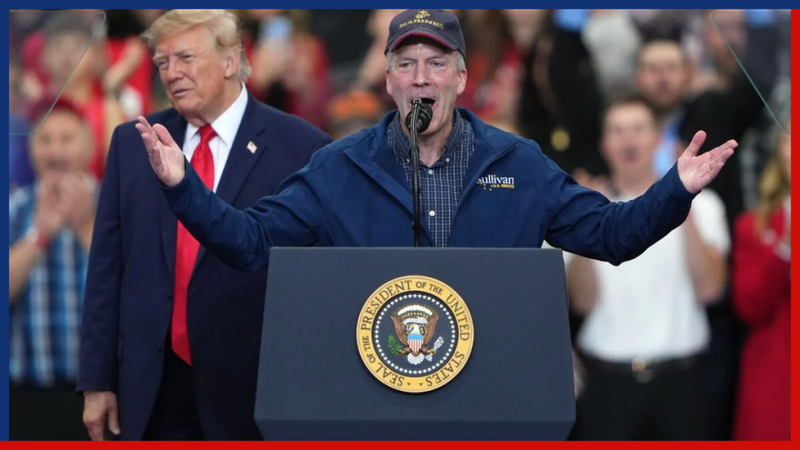
Two Sullivans and a Ranked-Choice Ballot
Alaska's Senate race features incumbent Republican Dan Sullivan facing Democrat Mary Peltola, a former representative who polls narrowly ahead. Also on the ballot: Daniel J. Sullivan Jr., a novice candidate with a nearly identical name, who draws single-digit support.
The DOJ's theory is straightforward enough on its face. If Dan Sullivan loses to Peltola but would have won had votes cast for Daniel J. Sullivan Jr. gone to him instead, the department wants a federal judge to block certification of the result. The complaint asks for an investigation into whether those votes were "meant for" the senator—without explaining how such an investigation would actually work.
There's a wrinkle: Alaska uses ranked-choice voting. A voter who ranked both Sullivans could still have a second choice transfer to the incumbent in later rounds. The other Sullivan was initially rejected as a candidate for trying to confuse voters, but a trial court ruled in June that he could appear, and the Alaska Supreme Court affirmed.
A Preamble and a Prayer
Here's where things get thin. The complaint cites the National Voter Registration Act's preamble—the introductory language stating the statute's purposes, including protecting "the integrity of the electoral process"—as the basis for a state duty.
Election law scholar Derek Muller noted that the NVRA preamble doesn't actually create such a duty. He wrote that the DOJ removed the words identifying the passage as a statement of purposes and replaced them with language not in the statute. Muller added that he couldn't imagine Republican election litigators wanting to open that NVRA language to broad litigation in future elections—a fair point, given how such a precedent could be turned around.
Richard Pildes called it one of the weakest election lawsuits he's seen and said it should have no realistic chance of success. Richard Hasen said no federal statute gives the DOJ the right to sue over these issues, and the Constitution doesn't give it standing. The Constitution gives states authority over congressional elections unless Congress alters the rules by statute—and Congress hasn't.
There's also a drafting problem. The case is captioned as seeking declaratory and injunctive relief, but Muller wrote that the prayer for relief lacks a verb actually asking the court to act. A prior paragraph seeks declaratory relief. It's the kind of detail that suggests the filing was built for a headline rather than a courtroom.
Both Late and Premature
The ballot is finalized. The election hasn't occurred. As the New York Times reports, that makes the suit both late and premature—a neat trick.
Muller wrote that the case isn't yet ripe and that the DOJ is "pre-suing" to signal it's doing something and is ready if the result goes against Republicans. Ballot access cases are normally brought before ballots are printed, and the best evidence of voter intent is how they marked their ballots—not a federal investigation launched after the fact.
Hasen said a pre-election filing could serve as a place-holder or "zombie lawsuit" if Senator Sullivan loses narrowly. But such a challenge would belong to the senator in state court, not to the DOJ in federal court.
The Political Context
The Times reports the suit raised alarms as President Trump has sought to undermine confidence in elections when polls suggest Republican losses—citing his attempt to overturn the 2020 election. The timing here is telling: the DOJ filed before a single vote was cast, targeting a race where the incumbent trails in the polls.
Muller's assessment cuts to the heart of it: like many DOJ letters in recent years, the complaint is designed to win the press release rather than the litigation. At this stage, the dispute is left to the political process, and there isn't much for the legal process to do.
The Bottom Line
*United States v. Alaska* asks a federal court to intervene in an election that hasn't happened, based on a statute that doesn't say what the government claims, to remedy a harm that may never materialize. The legal experts are nearly unanimous: it's a messaging exercise dressed up as a lawsuit.
Whether it succeeds as messaging is a political question. Whether it succeeds as law is not—and the answer, according to the people who study this for a living, is almost certainly no.